





Buying a Flat in Vienna: Checklist and Tips – What You Should Look Out For
You don’t buy a new flat every day. From financing and land registry entries to ancillary purchase costs, checking the energy performance certificate and understanding all the fine print, there is quite a lot to get your head around. More importantly, you need to know what should be checked in the first place.
So what should you pay attention to, and which mistakes should you definitely avoid? In this article, we share practical checklists for buying a flat in Vienna - for first-time buyers, investors and families alike.
Setting Your Budget for Buying a Flat: How Much Can I Afford in Vienna?
At last, the time has come: your savings, an inheritance, or often a combination of both, are about to find “a new home”. Or, more precisely, they are about to become your new home. The money that may have been sitting in savings accounts or bank accounts until now is set to become the foundation for a new owner-occupied flat.
If your available equity is not sufficient, it is usually supplemented with external financing. In most cases, this means a loan that turns the dream of owning a property - or purchasing an investment flat - into reality. Together, equity and borrowed capital define the budget you can then use as the basis for your property search.
Budget Calculation: The First Step Before Buying a Flat
Assess your budget realistically and answer the following questions in advance:
- How much equity do you have available?
- How much additional external financing will you need?
Important tip: Do not calculate your expenses too tightly. Make sure you also factor in ancillary purchase costs, furnishings and any potential renovation work.
The best way to determine how much additional capital is available is through a financing consultation. At Glorit, we support the entire sales process together with independent financing advisors - an advantage that gives you a clear overview of your financing options and leads directly to the next step.
Clarifying Financing: How Can You Afford to Buy a Flat in Vienna?
As a rule, buying a flat requires a certain amount of equity. The remainder of the purchase price is usually covered by external financing - typically a bank loan.
For many people, the first step is to contact their own bank. However, independent financing advice is often even more beneficial. Independent advisors can respond more individually to your needs, provide a better overview of the market and often secure more attractive interest rate conditions - without being tied to specific banks or financial products. Together, suitable loan models are then developed and the resulting monthly payments are calculated realistically.
Glor-ious tip: With property developer Glorit, you benefit not only from exclusive locations, but also from comprehensive advice. From your initial, non-binding enquiry and the purchase process through to the handover of your keys - and beyond - your personal Glorit advisor will support you with expertise and reliability. In addition, independent financing partners are on hand to help you find the right financing solution for your individual needs.
Each bank assesses different criteria and serves different target groups. That is why it is essential to prepare the documents and financing concept as thoroughly as possible. The better the customer’s financial situation is presented, and the lower the risk perceived by the bank, the more attractive the offer is likely to be. We invest a great deal of time and effort in this phase, as it lays the foundation for attractive property financing. We then negotiate the respective offers with the banks in order to achieve the best possible solution for the customer.

Checking the Location: Where Should You Buy in Vienna?
Are you more of a city person, or do you prefer spending your weekends in the garden? What is better for your family: living by the water, or living close to work and nursery? These fundamental questions should be clarified in order to narrow down your personal search area in a targeted way.
Buying a Flat in Vienna: How to Properly Assess Districts and Neighbourhoods
It is also worth taking a closer look at the individual districts that make it onto your shortlist. In addition to sought-after locations, you should also consider up-and-coming districts and neighbourhoods, which are often still more affordable while also offering strong development potential.
Key Location Factors at a Glance
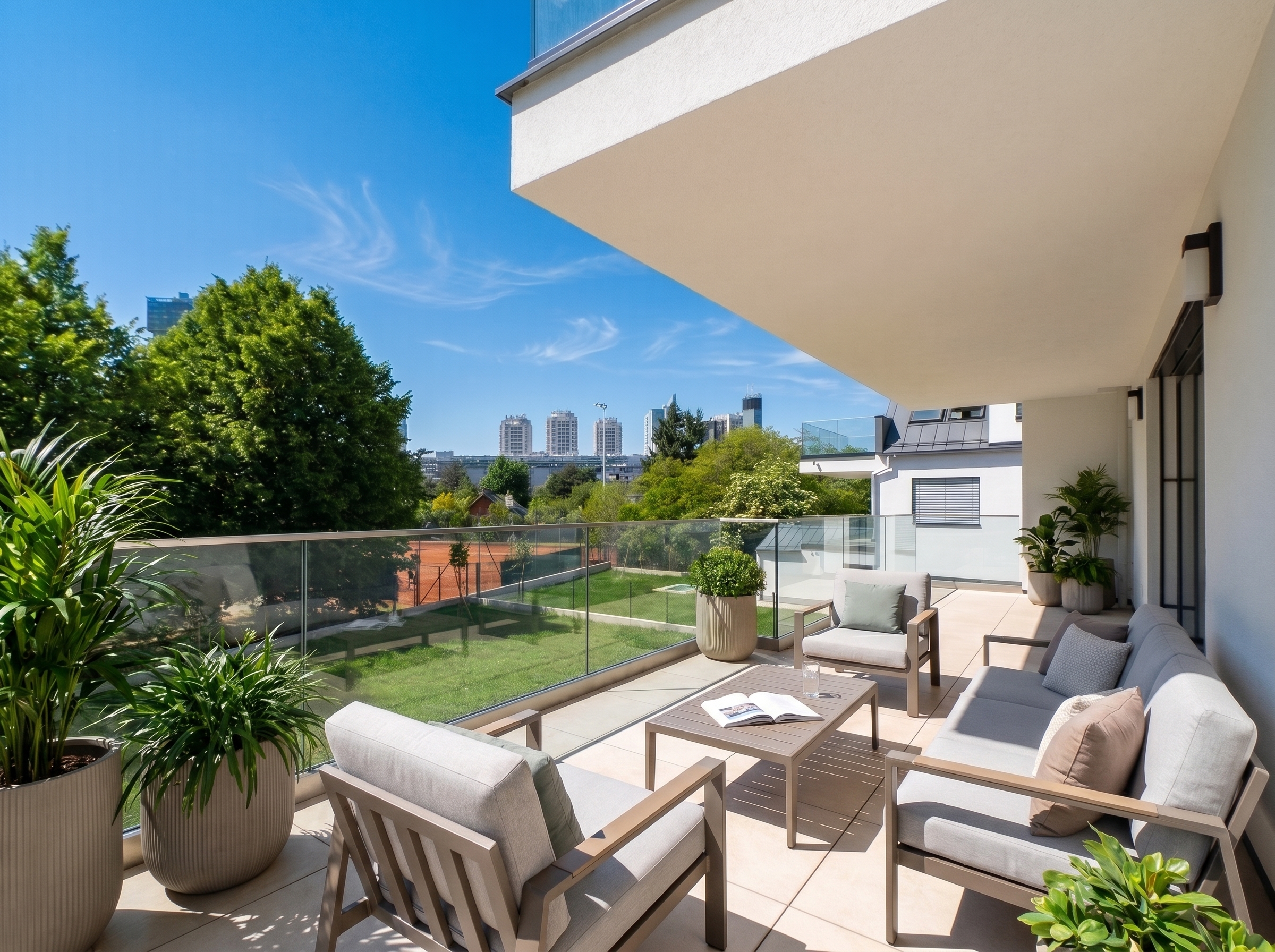
Depending on your personal circumstances and needs, many other factors may also come into focus. Drivers should pay attention to sufficient parking options. Those who prefer to leave the car at home will want convenient public transport connections. Parents, on the other hand, often focus on good nurseries and schools in the immediate vicinity - or perhaps even green spaces and water nearby.
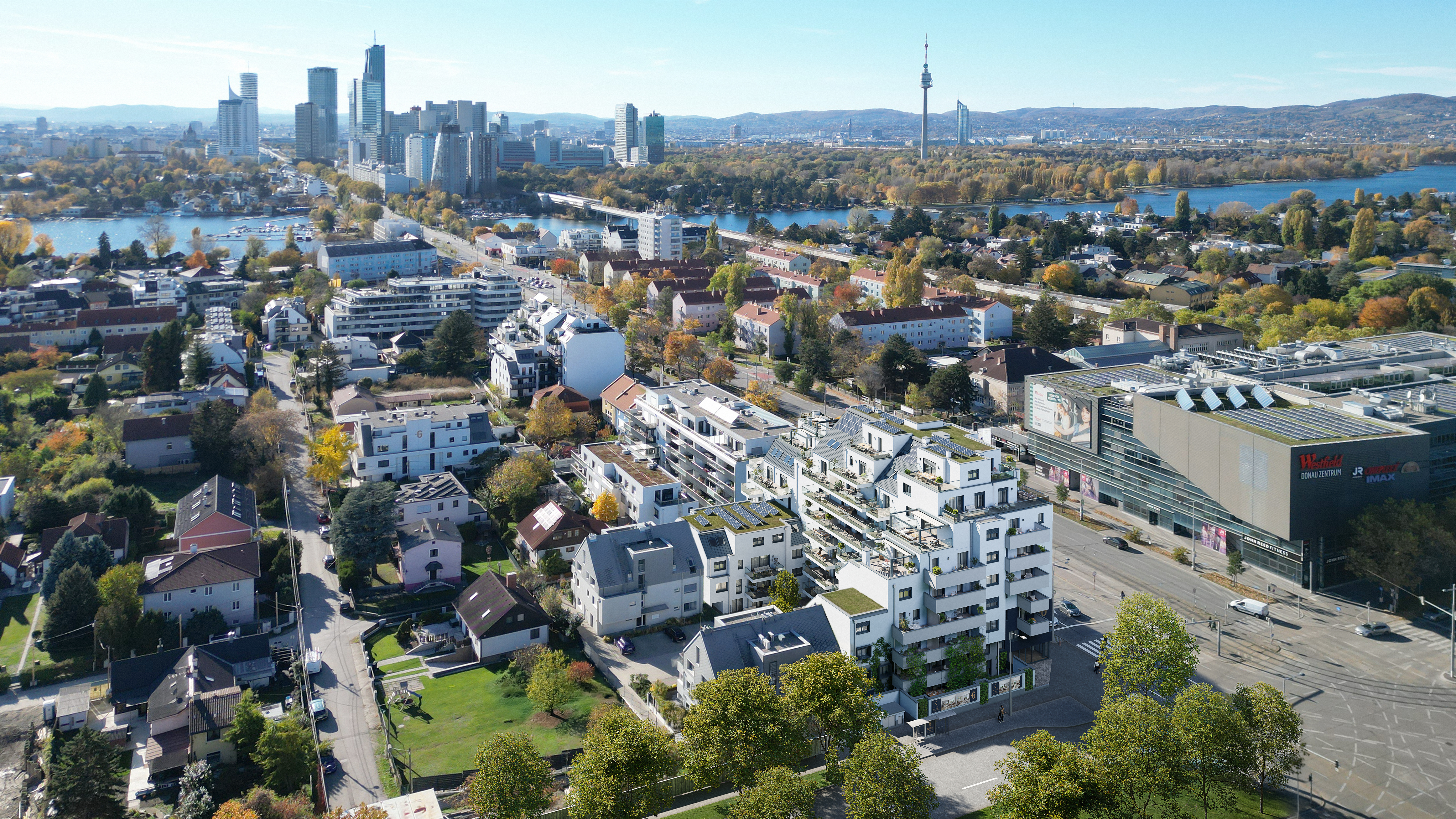
One example: Flats in Vienna´s 22nd district (Donaustadt) are particularly popular with families - above all because of the many green spaces, the proximity to the Old Danube and the Lobau National Park, as well as the excellent infrastructure.
Check the Condition of the Flat and the Building
Especially when buying period properties, it is well worth taking a close look at all the details that make up the property. This starts with the windows and building services and extends to the structural fabric and heating system. In this respect, there is no such thing as being too meticulous - quite the opposite. It is better to inspect everything carefully now than to face expensive repairs later. After all, as the future owner, you will be responsible for covering the costs of any damage yourself - and refurbishment work can quickly become very costly.
The building itself should also be examined carefully, as you will become part of an owners’ association together with the other apartment owners. Just imagine moving into your new dream flat, only for the façade to be renovated shortly afterwards and scaffolding to block your view.
Situations like these can be avoided if you:
- view the flat thoroughly
- review any planned refurbishment work
- speak to the property management company, estate agent or seller
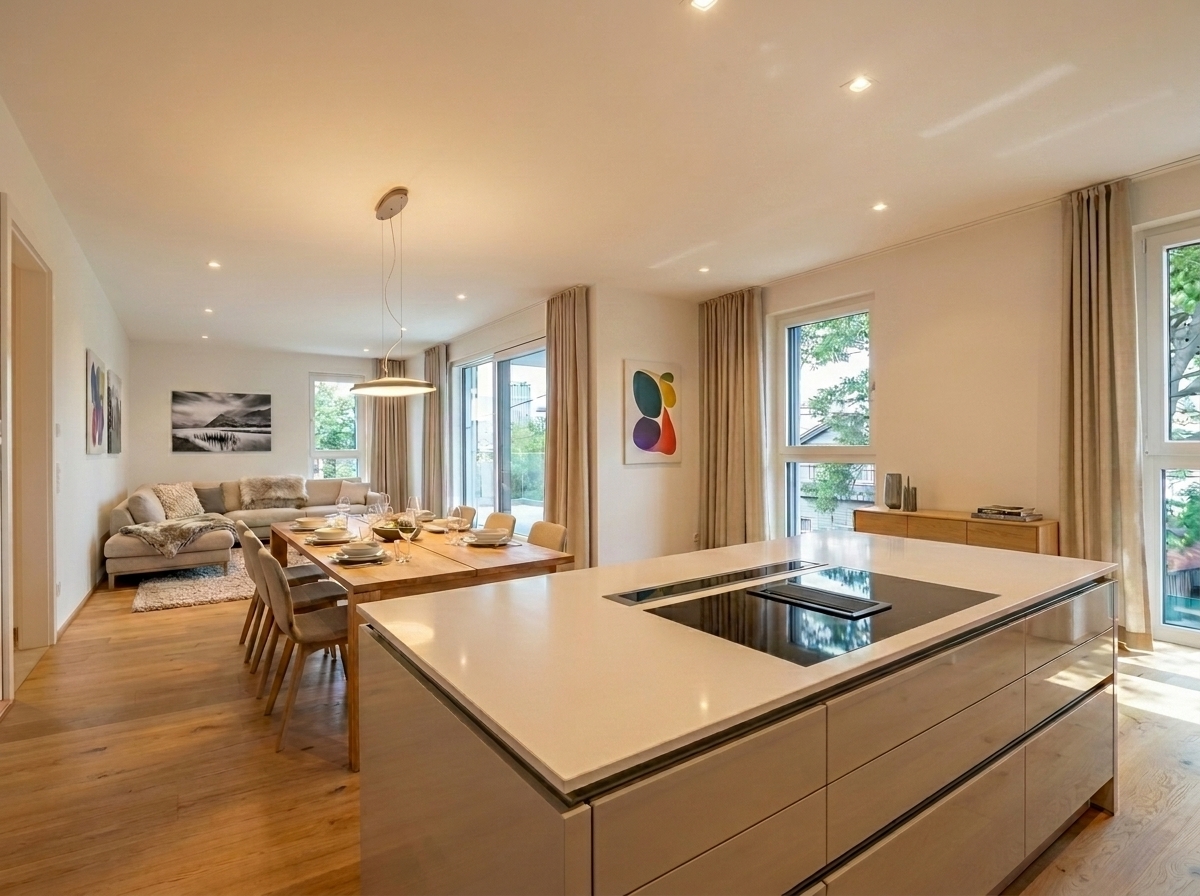
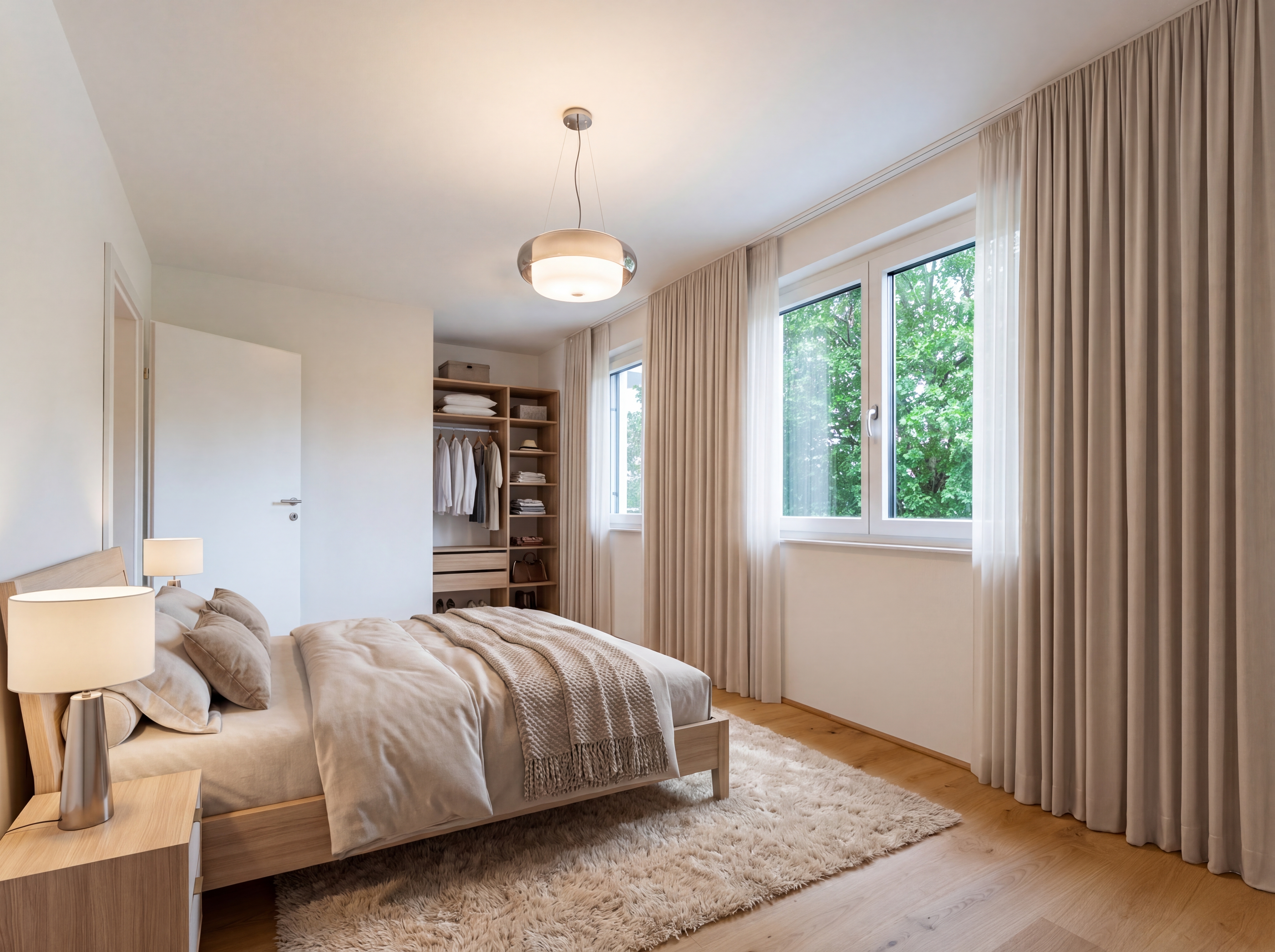
Those who want to be on the safe side from the outset should opt for newly built first-occupancy flats. These offer numerous advantages:
- Modern construction: New-build flats feature contemporary building technology, such as underfloor heating, ceiling cooling via thermal component activation, as well as windows and insulation that meet current standards.
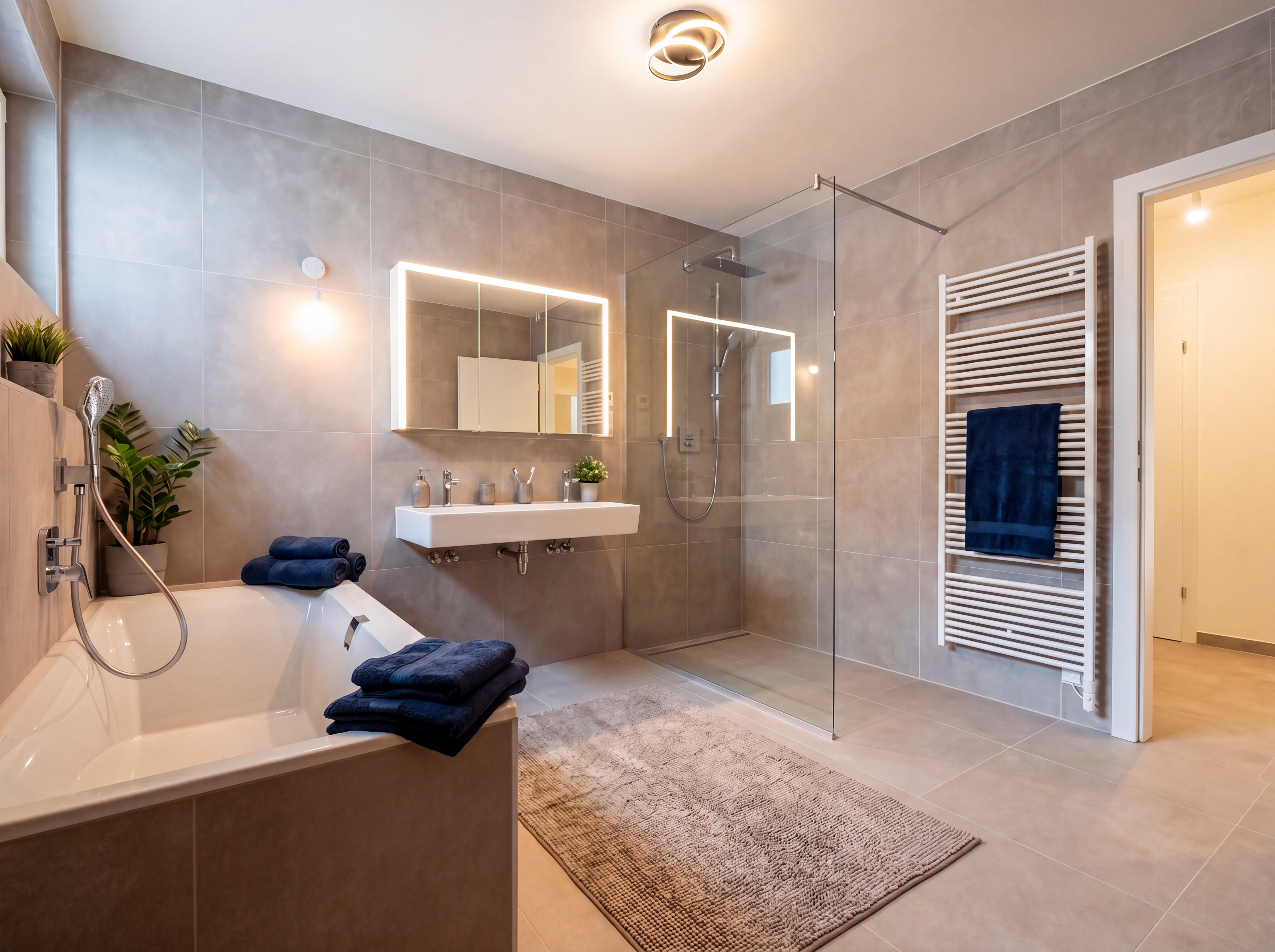
- High-quality fittings: Durable materials, modern bathrooms and smart living solutions provide additional comfort and a contemporary living experience.
- High energy efficiency: Heat pumps, photovoltaic systems and optimised building envelopes reduce ongoing operating costs and improve sustainability.
- Lower maintenance requirements: In the first few years, there are generally no refurbishment costs, and ongoing maintenance requirements are significantly lower than with existing properties.
- Contemporary floor plans: New-build properties often offer open, modern living concepts that reflect today’s lifestyle needs. When buying during the construction phase, there is also often still scope to help shape the choice of materials or certain floor plan details.
- Attractive investment: Thanks to modern standards, energy-efficient construction and high residential quality, new-build projects are particularly attractive to tenants and are often considered stable in value.
Check Service Charges: Assessing Ongoing Costs Correctly
Buying a flat is not the end of the financial considerations. Taking a close look at the ongoing costs is therefore an important step before making a purchase decision. As a future apartment owner, you will have regular payments to consider in addition to any potential loan instalments. These include, in particular, service charges, contributions to the maintenance reserve, as well as heating and energy costs. These ongoing expenses should be calculated realistically and never underestimated.
Typical ongoing costs include:
- service charges, such as property management, cleaning and similar expenses
- maintenance reserve contributions
- heating and energy costs
These costs in particular can vary significantly depending on the building, location and condition of the property, and should therefore be checked carefully before purchase.
Do Not Forget Ancillary Purchase Costs
Is the purchase price of the flat fully within your budget? Congratulations - provided you have also factored in the ancillary purchase costs. For this reason, it is worth taking another careful look at all the costs you should keep in mind when making your calculations.
The following ancillary costs should be considered:
- 3.5% real estate transfer tax
- Land Registry fee: 1.1% of the purchase price and 1.2% for registering the lien/mortgage
- 1.5% contract preparation fee, excluding VAT
- notary certification fees and out-of-pocket expenses, depending on the individual case
- estate agent fees, where applicable
Pay Attention to the Fine Print: Check the Purchase Agreement
Particular care is required when it comes to the purchase agreement. You should therefore always have it reviewed by legal experts to ensure that no risks or deadlines are overlooked. After all, inaccuracies or a lack of specialist knowledge can prove costly later on.
What you should pay particular attention to in the purchase agreement
A purchase agreement must include several fundamental pieces of information and clauses. These elements protect both parties and regulate all key terms of the real estate purchase. A template for a real estate purchase agreement can serve as guidance, but should never be used as a substitute for a legally reviewed contract.
The Purchase Agreement Should Definitely Include the Following:
- Details of the contracting parties: Full name, address and personal details of the buyer and seller, such as date of birth, social security numbers, nationality and occupation.
- Description of the property: Depending on the type of property, all relevant information should be included, such as the address, location, size, land registry details, building permit, all relevant plans, as well as a building and specifications description.
- Purchase price and payment terms: The agreed purchase price, deposit and detailed payment terms.
- Easements: All existing easements, such as tenancy rights, rights of residence, utility rights, sewers or rights of way, must be clearly recorded in the Land Registry and should be taken into account in the property purchase agreement.
- Freedom from encumbrances and warranty: Information on whether the property will be handed over free from encumbrances, meaning without mortgages or land charges.
- Date of handover: A precise provision stating when the property will be handed over to the buyer.
- Termination clauses: Conditions under which the agreement becomes invalid, for example in the event of non-payment of the purchase price.
- Right of withdrawal and deadlines: Provisions relating to a possible withdrawal from the agreement.
- Trustee: This is usually the appointed notary, lawyer or solicitor.
Glor-ious tip: At Glorit, independent lawyer and contract drafter Mag. Arno Pajek, LL.M. supports you reliably throughout the purchase agreement process with his expertise in property law, developer law and contract law, and is available to advise you on any questions you may have.
Pay Attention to the Property Developer’s Creditworthiness
When buying a flat in Vienna, buyers should not only pay attention to the location, price and fittings, but also check the reliability and financial stability of the seller or property developer. Particularly with new-build projects, it makes sense to check whether the company is financially stable and has already successfully completed comparable projects.
The statutory protection models under the Austrian Property Developer Contract Act, known as the BTVG Bauträgervertragsgesetz, do protect buyers against the loss of payments already made and safeguard the acquisition of legal ownership. However, they do not automatically prevent delays, construction stoppages or additional effort if a property developer runs into financial difficulties.
It is therefore worth reviewing an extract from the company register or current financial statements before signing the contract, and obtaining a credit report, for example from KSV1870.
Check the Documents: These Documents Are Particularly Important When Buying a Flat in Vienna
Before making a purchase, you should carefully review all relevant documents. If these are not provided to you automatically, you should specifically ask for them:
- Land Registry extract
- condominium ownership agreement / utility value appraisal
- minutes of owners’ meetings
- maintenance reserve balance and refurbishment plans
- building permit and occupancy permit
- house rules
- energy performance certificate
Plan Your Next Step
So it is decided: you want to buy a flat in Vienna? Get non-binding advice and find the right flat in Vienna - tailored to your budget and your personal circumstances.
The Glorit advisory team will support you in choosing your dream property, work together with independent financing experts to find the right financing solution for your individual situation, and accompany you throughout the entire purchase process - and beyond the handover of your keys.