






Heating in winter, cooling in summer: How a modern air-to-water heat pump works
A home designed for comfort – for you and the environment. This requires smart construction methods and sustainable heating systems. That is why all Glorit homes are equipped with modern air-to-water heat pumps: they provide cosy warmth in winter and keep interiors pleasantly cool in summer. But how does an air-source heat pump actually extract heat from the surrounding air and even cool rooms when needed? We explain how it works and the benefits it offers.
Refrigerant cycle for cosy warmth in winter
It may be hard to imagine, but it is true: even at low outdoor temperatures, the air still contains usable thermal energy. Even in bitterly cold conditions of around -20°C, a modern air-to-water heat pump can absorb this renewable energy and use it to heat a home.
At the heart of an air-source heat pump is what is known as the refrigerant cycle. But do not be misled by this apparent contradiction. By harnessing ambient heat and making intelligent use of changes in the refrigerant’s physical state, the system converts low-temperature environmental energy into useful heat.
How is heat extracted from the air?
The individual stages of an air-to-water heat pump:
- A fan draws in outdoor air and passes it over an evaporator containing circulating refrigerant.
- The refrigerant absorbs thermal energy from the outdoor air. In the process, it evaporates and changes into a gaseous state.
- A compressor compresses the gaseous refrigerant. This causes its pressure and temperature to rise significantly.
- The now-hot refrigerant transfers its thermal energy to the heating water via a heat exchanger. This water can then supply an underfloor heating system, for example.
- As it releases heat, the refrigerant cools down, condenses back into a liquid and is depressurised. The cycle then begins again.
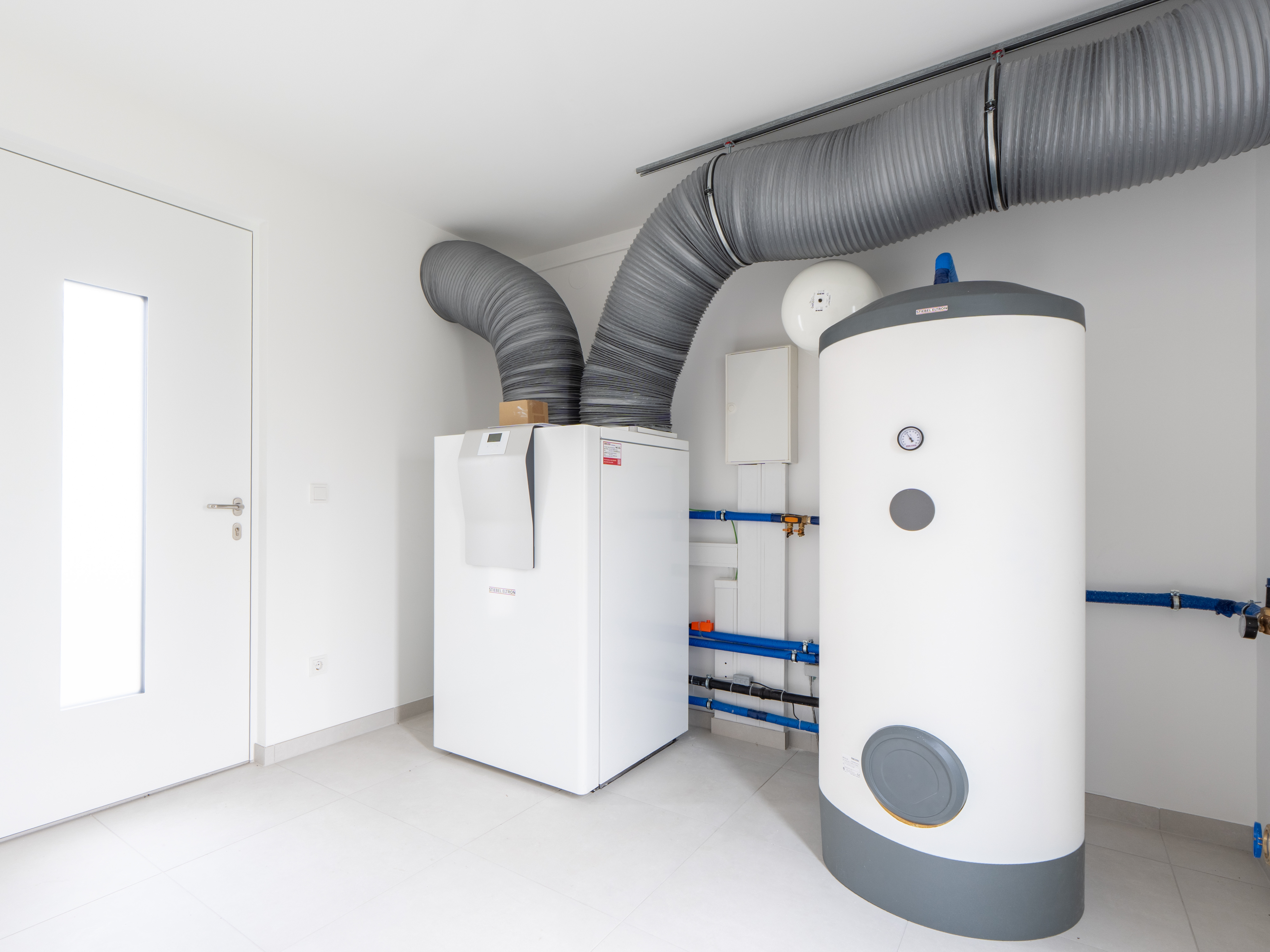
Heat pump with cooling function: staying pleasantly cool on hot summer days
A modern air-to-water heat pump can do more than provide heating and hot water. When combined with a suitable surface heating system, such as underfloor heating, it can also be used to gently cool living spaces in summer.
The key advantage is that cooling is provided across large surfaces, such as the floor or thermally activated building components. This creates a pleasant indoor climate without cold air currents, draughts or disruptive noise inside the home.
Good thermal insulation and effective external shading also play an important role in preventing the building from overheating unnecessarily during the summer.
How does cooling with a heat pump work?
During the heating season, warm heating water circulates through the underfloor heating system and releases heat into the rooms. In summer, this process is reversed.
In a heat pump with an active cooling function, the refrigerant cycle operates in reverse, meaning it works in the opposite direction to heating mode. The heat pump extracts heat from the heating water, cooling it down. The temperature-controlled water then flows through the pipes of the underfloor heating system or thermally activated building components.
The cooler surfaces absorb heat from the room, allowing the indoor temperature to be reduced evenly and gently. In summer, the underfloor heating system effectively becomes an underfloor cooling system.
Gentle cooling instead of conventional air conditioning
Cooling via the floor or thermally activated building components works differently from conventional air conditioning. It does not produce intensely chilled air and is not designed to cool rooms significantly within a short period of time.
Instead, it reduces temperature peaks and helps maintain a consistently pleasant indoor climate. Depending on the building, outdoor temperature and level of solar gain, the room temperature can be lowered by up to around 3°C.
Benefits of an air-to-water heat pump
- Environmentally friendly: As air-source heat pumps use energy from the surrounding air, they reduce the need for fossil fuels and therefore help lower CO₂ emissions. This makes them a valuable contributor to climate protection.
- Energy-efficient: Air-source heat pumps deliver more heat energy than the electrical energy they consume. From 1 kWh of electricity, they can produce up to 4 kWh of heat, making them a highly efficient heating system.
- Lower costs: Thanks to their high efficiency, air-source heat pumps can significantly reduce heating costs. Although the initial investment may be higher, the savings in running costs can offset this over the years.
- Suitable for year-round use: An air-source heat pump can be used not only for heating in winter, but also for cooling in summer. This makes it a smart all-round solution for any home.
Gut zu wissen!
Sämtliche Glorit-Häuser sind mit flüstereleisen Luft-Wasser-Wärmepumpe ausgesattet, die in der Regel ohne Außengerät auskommt.
Besonders „cool“: Im Sommer lässt sich das System umkehren. Über die Fußbodenheizung oder Bauteilaktivierung wird dem Gebäude sanft Wärme entzogen. Auf diese Weise kann die Raumtemperatur – abhängig von den jeweiligen Bedingungen – um bis zu etwa 3 °C gesenkt werden.
Experience outstanding home comfort: Modern homes in and around Vienna
The best way to discover what modern heat pump technology truly feels like is to experience it in person. Our knowledgeable advisory team will be happy to guide you through our developments with a personal tour. Alternatively, simply visit us ‘at home’: every weekend, we open the doors to selected properties for our Open House events.


