




Vienna Real Estate Market 2026: Trends, Forecasts and Prices
What can we expect from the Vienna real estate market in 2026? Demand for residential property is rising, while supply - particularly in the new-build segment - is becoming increasingly scarce, and prices are picking up again. But what does this mean in concrete terms for buyers? Is now the right time to invest in property in Vienna?
There are no definitive answers. However, there are clear trends and forecasts that indicate where the market is heading - and what you should consider when making your decision.
What Has Happened So Far? A Brief Retrospective
The years 2021 and 2022 are considered exceptional by developers and real estate professionals. In hardly any other period were so many properties sold. As is typical in many market cycles, this peak was followed by a noticeable slowdown in 2023 and 2024, driven by economic uncertainty, rising interest rates, and stricter lending regulations under the KIM ordinance. Initial signs of recovery only began to emerge in 2025.
Let’s briefly summarize the key developments in the Austrian real estate market over recent years:
- The KIM regulation, high inflation rates, and rapidly rising interest rates led to a pronounced reluctance to buy among prospective purchasers.
- In 2025, the European Central Bank lowered key interest rates several times in succession, which helped to revive demand for real estate.
- At the same time, fewer new-build properties are entering the market, despite continued strong demand in metropolitan areas such as Vienna.
- Experts are warning about the consequences of this supply gap: property prices in Austria are rising again—also driven by increasing construction costs.
Key Forecasts for the Vienna Real Estate Market in 2026
Demand for new-build properties exceeds supply
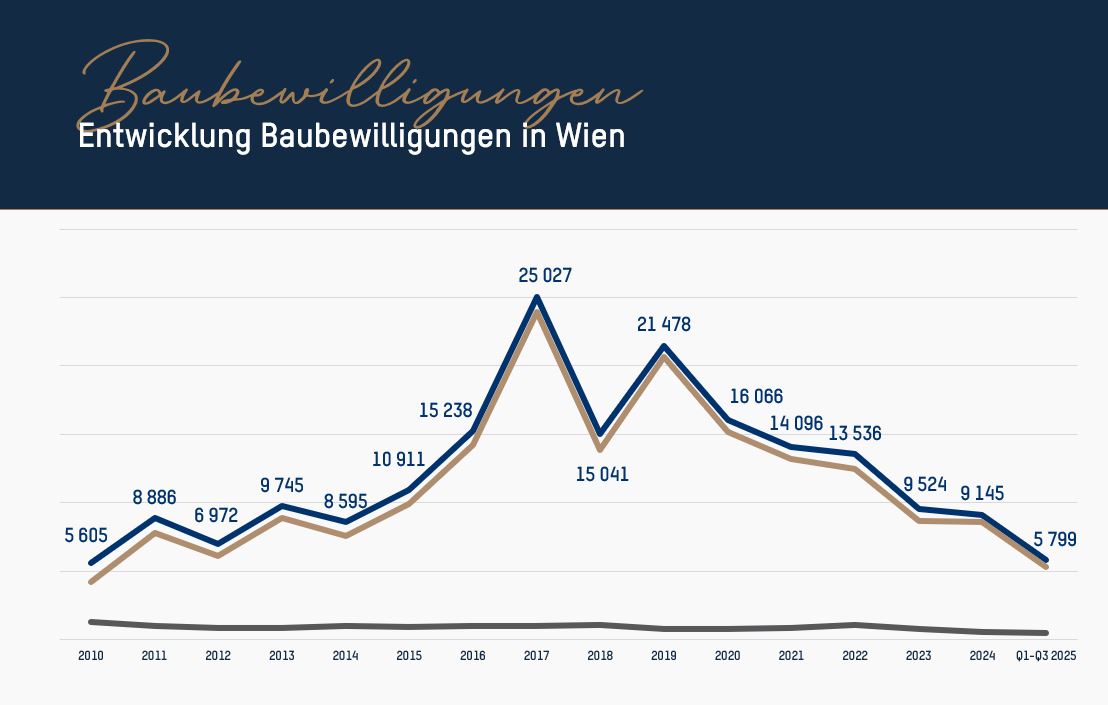
Building permits in Vienna declined from 21,400 in 2019 to just 5,772 in 2025 - a drop of nearly 72%. At the same time, Vienna continues to grow. By 2040, experts expect the population to increase by around 9% to approximately 2.2 million residents, resulting in additional demand for housing.
The volume of newly developed residential space - both rental and owner-occupied - remains well below the actual needs of Vienna’s population. The consequence: from 2026 onwards, new construction activity will fall significantly short of demand, supply will continue to shrink, and additional upward pressure on prices will emerge.
Housing remains expensive
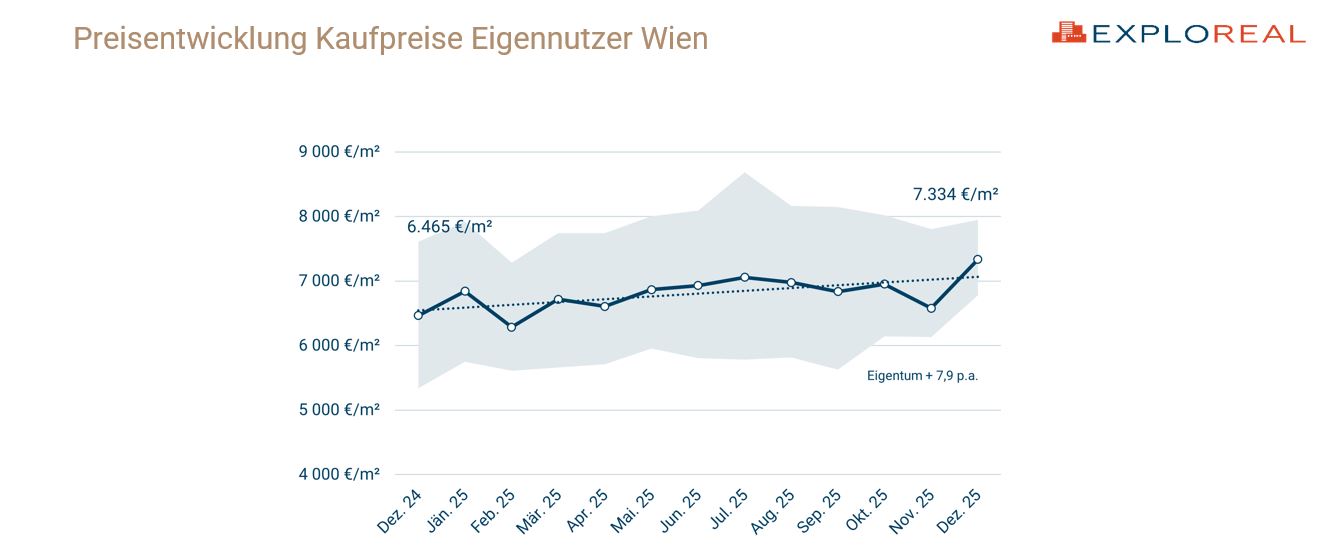
Prices are rising - and there are two mutually reinforcing reasons for this: a widening supply gap and structurally high construction and labor costs, both of which directly impact sales prices. This is particularly evident in Vienna: in 2025, purchase prices for owner-occupiers increased across the city—by as much as +11.5% in districts such as Floridsdorf and Donaustadt, according to Mag. Alexander Bosak, founder and CEO of Exploreal GmbH.
Housing is becoming more affordable
While property prices are rising again, affordability is improving at the same time. The reason lies in increasing real incomes and stabilized financing conditions. In Austria, incomes have grown significantly in recent years - for example, according to Statistics Austria, the median gross annual income of full-time employees was around €55,678 in 2024, an increase of over 8% compared to the previous year.
Where buyers previously had to spend an average of 14.4 annual salaries on a 100-square-meter apartment, this figure has now dropped to 11.2 years. This trend is already reflected in revived demand and increasing volumes of mortgage lending: according to the Austrian National Bank, households in Austria took out significantly more new housing loans again in 2025.
Currently, property buyers also benefit from an exemption from fees for registering ownership rights and mortgage liens in the land register. However, this saving is temporary. Only applications submitted by 30 June 2026 at the latest will qualify. Buyers can save:
- 1.1% of the purchase price for the registration of ownership (capped at €11,000), and
- 1.2% of the loan amount for registering the mortgage lien (capped at €6,000) in case of financing.
Glorit tip: You can find all the details on the fee exemption and how to currently save up to €17,000 on a property purchase until 30 June 2026 here.
Key Trends in the Vienna Real Estate Market in 2026
How do these developments interact - and which trends are specifically shaping the market? What exactly can we expect this year, and which properties should prospective buyers keep a particularly close eye on?
Trend 1: Location, Location, Location
The supply of newly built condominiums is expected to continue declining in the coming years. This trend is particularly evident in high-growth districts such as Floridsdorf and Donaustadt: while construction activity was intense in these areas for many years, new development is now slowing noticeably - despite consistently strong demand.
These districts, in particular, benefit from a combination of factors that are becoming increasingly sought-after in Vienna’s real estate market: abundant green spaces, immediate proximity to recreational areas such as the Alte Donau and the Lobau National Park, as well as excellent connections to the city center.
The implications are clear:
- Location will continue to gain importance, and
- distinctive property features will increasingly come into focus.
Trend 2: Quality Outperforms Quantity
How was the property built? Which materials and brands were used? How well thought-out are the layout and everyday usability? And which additional features genuinely make daily life easier? Questions like these are becoming increasingly central for property buyers in 2026.
The focus in Vienna’s real estate market is clearly shifting: away from pure square-meter optimization toward sustainable construction quality, durable materials, and well-executed design.
The use of high-quality branded products, precise workmanship, and thoughtfully planned features makes a tangible difference in everyday living—and is increasingly becoming a decisive purchasing factor. Whether it’s integrated energy monitoring, smart storage solutions, or practical elements such as a laundry chute, these are exactly the features that sustainably enhance comfort, efficiency, and usability.
The implications are clear:
- High-quality materials, strong brands, and excellent execution are becoming key decision criteria.
- Value-retaining properties focus on substance, durability, and functional design.
- Smart technologies are increasing comfort and everyday practicality.
Expectations have risen significantly - and that’s a positive development. Today, buyers are looking for a true all-in-one, worry-free package: from turnkey handover and financing support to access to trusted partners for interior design, kitchens, or landscaping. Since the pandemic, the focus on quality of living has also increased noticeably. More space for home offices, generous outdoor areas, ample natural light, and well-designed floor plans have become key decision-making criteria.
Trend 3: Sustainable & Smart Real Estate Concepts
Energy efficiency and sustainable building concepts are no longer a “nice-to-have” but a key factor in property purchases. Rising energy prices, stricter regulatory requirements, and growing awareness of operating costs are increasingly bringing sustainable solutions into focus.
Investments in modern technologies such as photovoltaic systems, heat pumps, and efficient cooling and heating systems deliver multiple benefits: they reduce ongoing energy costs, increase independence from external energy price fluctuations, and help secure the long-term attractiveness of the property.
The implications are clear:
- Lower operating costs are becoming a central purchase argument.
- Energy-efficient properties ensure long-term value stability and market appeal.
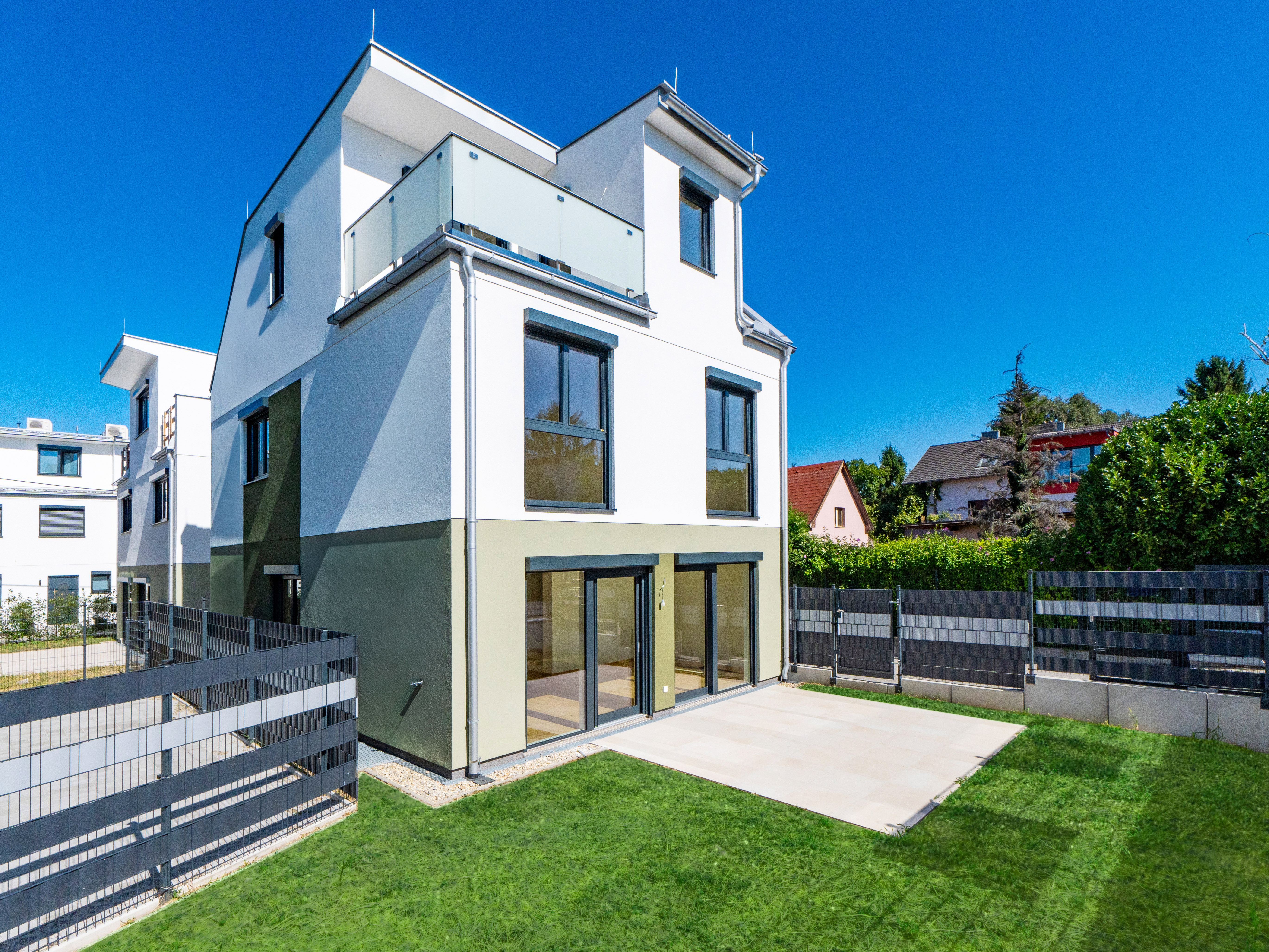
Example from the Glorit Portfolio: Arminenstraße 21 – detached House on freehold land (!) Just 200 Meters from the Alte Donau
The project is a prime example of how current market trends can be successfully implemented: a highly sought-after location in close proximity to the Alte Donau, combined with energy-efficient construction and modern amenities.
- A heat pump ensures efficient heating and cooling
- A photovoltaic system, including a blackout-capable storage unit and wallbox, enables self-generated electricity and reduces ongoing costs
- Air conditioning guarantees comfortable indoor temperatures even on hot summer days
- A smart home system allows for convenient and energy-efficient control of heating, shading, and lighting.
Buy or Wait? The Question of the Right Timing
The question of the optimal time to buy can be assessed more reliably in 2026 than in recent months. Several developments suggest that now is a good time to take a closer look at purchasing real estate.
- A look at price trends shows that, following the correction phase of 2023/24, prices - particularly for new builds- are rising again. Given declining construction activity and stable demand, this trend is expected to continue.
- This leads directly to the second key factor: supply. Building permits and completion figures have dropped significantly across Austria, while population growth continues to drive demand. The window of opportunity for new-build properties in prime locations is gradually closing - not dramatically, but measurably and with a clear direction.
- Financing conditions also remain attractive. Interest rates have stabilized again, with fixed rates below 3% providing planning security. In addition, buyers who complete their purchase by 30 June 2026 benefit from a temporary exemption from land register fees -resulting in potential savings of up to €17,000, which will no longer be available from July onwards.
The window of opportunity for new-build homeownership is narrowing. Those seeking quality, prime location, and planning security should act now.
Conclusion: Quo Vadis, Real Estate Market 2026?
In 2026, the Vienna real estate market is clearly moving toward a demand-driven environment: while new construction activity is declining, demand - particularly in prime locations - remains consistently high. This dynamic is leading to a further tightening of supply, with quality increasingly becoming the key differentiating factor.
Anyone looking to gain an overview of currently available new-build projects in Vienna will find a curated selection of high-quality developments here, with a focus on energy efficiency, location, and sustainable construction. Looking ahead, Glorit will continue to develop new projects in selected growth areas across Vienna including districts 1210, 1220, and 1230.